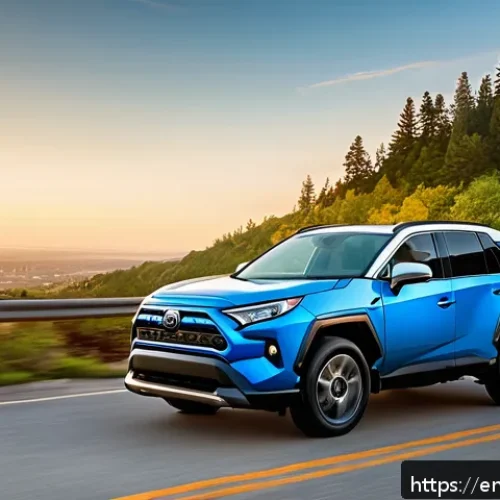
Alright, let’s talk cars! You know that feeling when you’re finally ready to upgrade, but the sheer number of options out there just sends your head spinning?
It’s tougher than ever these days, isn’t it? With gas prices doing their wild rollercoaster ride and everyone talking about a greener future, making the ‘right’ choice for your next ride feels like a huge decision, one that sticks with you for years.
I’ve personally spent countless hours agonizing over specs, poring over reviews, and even test-driving until I was practically numb. It’s not just about getting from A to B anymore; it’s about efficiency, technology, long-term savings, and honestly, what kind of statement you want to make.
It’s clear that the automotive landscape is shifting dramatically. We’re caught between the dependable, proven efficiency of hybrids and the exciting, cutting-edge promise of all-electric vehicles.
Each path has its own set of perks and quirks, and choosing can feel like picking between a comfortable old friend and an adventurous new acquaintance.
That’s why I wanted to dive deep into two of the most talked-about contenders in the family SUV market right now. Many of you have been asking me about them, and trust me, I’ve got thoughts.
So, when it comes to navigating this exciting but sometimes overwhelming world, especially when you’re weighing the steadfast reliability of a Toyota RAV4 Hybrid against the sleek, tech-forward allure of a Tesla Model Y, where do you even begin?
Both are phenomenal vehicles, yet they cater to slightly different drivers and lifestyles, each offering a unique proposition in today’s dynamic market.
Let’s find out exactly what makes them tick and which one might be your perfect match.
It’s always a bit of a whirlwind diving into the world of new cars, isn’t it? Especially when you’re trying to figure out if you’re going to embrace the familiar hum of a hybrid or jump headfirst into the silent, electrifying future.
I’ve been there, trust me. That mental back-and-forth between what you know and what’s new, it’s a journey! We’re talking about two heavyweights in the family SUV arena: the steadfast Toyota RAV4 Hybrid and the sleek, undeniably futuristic Tesla Model Y.
Both are fantastic in their own right, but they cater to completely different tastes and priorities. Let’s peel back the layers and see which one truly aligns with your driving dreams and daily demands.
Powering Your Journeys: Fueling Up vs. Plugging In

The Hybrid’s Steady Thrum
When you think about the Toyota RAV4 Hybrid, what probably comes to mind is that rock-solid reliability and, of course, incredible fuel efficiency. It’s a hybrid system that Toyota has really perfected over the years, stemming from its Prius roots, so you know you’re getting something tried and true.
Driving a RAV4 Hybrid, especially the 2025 model, feels incredibly familiar and reassuring. You still pull up to a gas pump, which for many, myself included, is a comfort in itself.
The beauty of it is that you’re not constantly worrying about finding a charging station or managing your range. With an EPA-estimated 41 MPG in the city, 38 MPG on the highway, and 39 MPG combined for most trims, this vehicle stretches a tank of gas impressively far.
I’ve heard stories, and personally experienced, how it sips fuel even with a full load or when tackling longer road trips. One driver even reported averaging 41.1 MPG on a long trip from Virginia to Florida with a bike rack attached – now that’s what I call real-world efficiency!
The transition between electric motor and gasoline engine is nearly imperceptible, making for a smooth and quiet ride around town. It’s the kind of vehicle that just gets out of your way and lets you live your life, without demanding a major shift in habits.
It offers that perfect bridge for those who are curious about electrification but aren’t quite ready to go all-in on an EV.
Embracing the Electric Revolution
Now, the Tesla Model Y is a whole different ballgame. It’s an all-electric vehicle, which means saying goodbye to gas stations entirely. This might sound intimidating at first, but once you get used to charging at home overnight or utilizing Tesla’s expansive Supercharger network, it actually becomes incredibly convenient.
Just imagine waking up every morning to a “full tank” – no more detours to the gas station! The 2025 Model Y Long Range, for example, boasts an EPA estimated range of up to 357 miles with the standard 19-inch wheels, which is seriously impressive.
Even with larger 20-inch wheels, you’re still looking at a very respectable 303 miles. In real-world driving, especially at highway speeds or with a few passengers and cargo, you might see that number dip a bit, but even then, it’s more than enough for most daily commutes and even longer road trips, provided you plan your charging stops.
I’ve seen tests where the Model Y Long Range achieved around 250-270 miles in mixed highway driving conditions with passengers, which is pretty solid.
The acceleration is instant and exhilarating, a silent surge of power that you simply don’t get from a traditional gasoline engine or even most hybrids.
It’s a completely different driving experience that feels incredibly modern and, dare I say, fun.
Behind the Wheel: Driving Dynamics and Daily Grinds
Comfort and Familiarity in the RAV4 Hybrid
When you slide into the driver’s seat of a RAV4 Hybrid, there’s an immediate sense of familiarity and comfort. Toyota has really honed its craft, offering an interior that feels robust and well-thought-out, perfect for the daily hustle.
The ride is generally smooth, soaking up road imperfections with ease, making it a pleasant companion for both city commutes and longer highway stretches.
I’ve heard some owners mention a slightly rougher ride on highways with its short wheelbase and some road noise, but for the most part, it’s a solid, dependable experience.
The steering is responsive enough for a family SUV, and the all-wheel-drive system (standard on all hybrid trims) provides confidence in various weather conditions, which is a huge plus if you live somewhere with unpredictable seasons.
Toyota also packs the RAV4 Hybrid with a generous suite of driver-assistance features, like automated emergency braking with pedestrian detection, lane-departure warning with lane-keeping assist, and adaptive cruise control, all standard.
These features aren’t just gadgets; they genuinely make driving safer and less fatiguing, especially on crowded highways. The physical buttons and traditional layout for climate control and infotainment mean there’s less of a learning curve, which many drivers, including myself, deeply appreciate.
The Model Y’s Thrilling Ride
Stepping into the Tesla Model Y is like entering a minimalist, high-tech cockpit. The large central touchscreen dominates the dashboard, controlling almost every function, which can be a bit of an adjustment if you’re used to physical buttons.
However, once you get the hang of it, the interface is incredibly intuitive and responsive. The driving experience is where the Model Y truly shines. The instant torque from the electric motors delivers exhilarating acceleration, making even mundane errands feel exciting.
It handles surprisingly well for an SUV, with a low center of gravity thanks to the battery pack, giving it a stable and planted feel. While some might find the ride a bit firm compared to the RAV4, the overall dynamic performance is on another level.
Tesla’s Autopilot features are a significant draw, offering adaptive cruise control and lane-centering that can handle much of the highway driving with remarkable proficiency.
The optional Full Self-Driving (Supervised) package takes it even further, navigating city streets, responding to traffic lights and stop signs, and even self-parking, though it still requires driver attention.
The continuous over-the-air software updates mean your Model Y can actually gain new features and improvements over time, which is something you just don’t get with traditional vehicles.
Dollars and Cents: Long-Term Ownership Unpacked
Weighing the Initial Investment
Let’s be real, the sticker price is often the first thing we look at, and there’s a noticeable difference here. The 2025 Toyota RAV4 Hybrid starts around $34,050 and can go up to nearly $50,000 depending on the trim and options.
For example, the XLE Premium trim, which offers a great balance of features without breaking the bank, is a popular choice. The Tesla Model Y, on the other hand, typically starts at a higher price point, ranging from about $46,380 to $54,990 for 2025 models, depending on the version.
That’s a significant upfront investment. However, it’s crucial to factor in potential federal and local EV tax credits and incentives that can bring the effective cost of a Model Y down considerably, sometimes narrowing that initial gap.
It really pays to do your homework on what’s available in your specific area when considering a Tesla.
Maintenance and Resale Value
This is where the long-term thinking really kicks in. Toyota has an undeniable reputation for reliability, and the RAV4 Hybrid is no exception. Owners often praise its low maintenance costs and long-term durability.
The hybrid system is backed by a robust warranty, with the hybrid battery covered for 10 years or 150,000 miles, which provides incredible peace of mind.
While general maintenance like oil changes and tire rotations are still necessary, you’re less likely to encounter major, unexpected repairs. When it comes to resale value, the RAV4 Hybrid typically holds its value very well, depreciating around 30.4% over five years.
This means when it’s time to sell or trade in, you’re likely to get a good chunk of your investment back. The Tesla Model Y’s maintenance picture is a bit different.
With fewer moving parts in an electric powertrain, you eliminate things like oil changes, spark plugs, and transmission fluid flushes. This can lead to lower routine maintenance costs.
However, Tesla’s reliability has had mixed reviews, with some owners reporting issues with build quality, panel gaps, electronics, and software glitches.
There have been reports of “phantom braking” and even issues with electric door handles failing, which can be concerning. While many software issues can be fixed with over-the-air updates, hardware problems require service.
The resale value is another point of consideration; the Model Y can depreciate more significantly than the RAV4 Hybrid, around 53.4% over five years. This doesn’t mean it’s a bad investment, but it’s something to be aware of if you’re planning on upgrading frequently.
Fuel Savings: The Real Game Changer
Here’s where the EV vs. Hybrid debate really heats up on your wallet. For the RAV4 Hybrid, an EPA-estimated 39 MPG combined means significantly fewer trips to the pump and substantial savings on gasoline, especially with today’s fluctuating gas prices.
I’ve talked to so many RAV4 Hybrid owners who rave about how little they spend on fuel, and honestly, that consistent saving adds up quickly. With a calculated city range of 770-855 miles on a single 55-liter fuel tank, road trips are a breeze without range anxiety.
Now, with the Tesla Model Y, you’re shifting from gasoline to electricity. While electricity costs vary depending on your local rates and whether you charge at home or use Superchargers, it’s generally much cheaper per “mile” than gasoline.
The Model Y RWD, for instance, gets an impressive 125 MPGe, while the AWD version sits at 117 MPGe. If you have solar panels at home or access to free/cheap charging, your “fuel” costs could be incredibly low.
Even paying for Supercharging, it often works out cheaper than filling up a gas tank. The caveat here is the upfront cost of installing a home charging solution if you don’t already have one, but for many, the long-term savings on energy make it worthwhile.
This is a huge factor for folks who drive a lot, where those pennies per mile really start to make a difference in your monthly budget.
Tech Talk: Infotainment and Connectivity
Toyota’s Intuitive Approach
When it comes to technology, the RAV4 Hybrid takes a more traditional, yet highly effective, approach. Most trims come with either an 8.0-inch or a larger 10.5-inch infotainment display that sprouts from the dashboard, which I find is positioned perfectly for visibility.
What I love is the inclusion of physical buttons and knobs for frequently used functions like climate control and volume. This means less fumbling around with a touchscreen while driving, which is a big win for safety and convenience in my book.
Wireless Apple CarPlay and Android Auto integration are standard across the board, which is fantastic for seamlessly integrating your smartphone. Having your familiar navigation, music, and messaging apps right there on the screen without plugging in is a game-changer.
Higher trims even offer a 12.3-inch digital gauge display, which adds a touch of modern flair without being overwhelming. There’s also an available wireless charging pad and an optional 11-speaker JBL stereo system that sounds amazing on those long drives.
Toyota’s focus here is on intuitive functionality that’s easy to learn and use, ensuring you’re connected without feeling like you need a pilot’s license to operate your car.
Tesla’s Minimalist Masterpiece
The Tesla Model Y’s interior is dominated by its impressive 15.4-inch central touchscreen, which is truly the command center for almost everything in the vehicle.
This is where you control climate, navigation, entertainment, and even adjust your side mirrors. It’s a bold design choice that really underscores Tesla’s futuristic vision.
While it takes some getting used to – seriously, I initially felt like I was driving a giant iPad – the system is incredibly fast, responsive, and packed with features.
You get built-in Netflix, Hulu, YouTube, and even video games, perfect for entertaining passengers (or yourself) while charging. The navigation system is one of the best in the business, offering real-time traffic updates and directing you to charging stations.
New Model Ys even feature an 8-inch rear screen for passengers to control climate and entertainment, which is a thoughtful addition for family trips. Connectivity is stellar, with fast data downloads and strong signal range, ensuring your calls are clear and streaming is seamless.
The minimalist design extends to things like the lack of a traditional gauge cluster, with all driving information displayed on the main screen, which I find really emphasizes the open, airy feel of the cabin, especially with the standard all-glass roof.
Family First: Space, Safety, and Practicality

Room for Everyone and Everything
For families, space and practicality are huge, and both of these SUVs deliver, albeit in slightly different ways. The 2025 Toyota RAV4 Hybrid comfortably seats five passengers, and I’ve found that even with a full house, everyone has enough room to relax without feeling squished.
Cargo space is really impressive, offering 37.5 cubic feet behind the rear seats, which expands to a cavernous 69.8 cubic feet when you fold them down.
That’s enough for strollers, groceries, sports gear, or even a weekend camping trip. I particularly appreciate the flexible cargo management system and the low load floor, which makes it easy to load and unload heavy items.
It truly feels like a vehicle designed for real-world family life, where you often need to carry a lot of stuff, and sometimes, a lot of people! The Tesla Model Y also offers seating for five, and the cabin feels incredibly spacious and airy, partly due to that expansive all-glass roof.
Tesla previously offered a third-row option, but newer models are strictly two-row, which makes sense given its compact SUV classification. What’s really impressive about the Model Y is its cargo capacity.
You get a generous 721 liters (about 25.5 cubic feet) behind the rear seats, which expands to a massive 2,138 liters (about 75.5 cubic feet) with the 60/40 split rear seats folded flat.
Plus, there’s a surprisingly large “frunk” (front trunk) that offers an additional 117 liters of waterproof storage – perfect for charging cables or even a small cooler.
This extra storage up front is something you won’t find in the RAV4 Hybrid, and it’s incredibly handy for keeping valuables out of sight or separating muddy gear.
Safety Features You Can Trust
Safety is non-negotiable, especially when you’re driving your loved ones around. Both the RAV4 Hybrid and the Model Y excel in this area, earning top safety ratings.
The 2025 Toyota RAV4 Hybrid comes loaded with Toyota Safety Sense 2.5, which includes standard automated emergency braking with pedestrian detection, lane-departure warning with lane-keeping assist, and adaptive cruise control.
It’s received excellent crash test ratings from organizations like the NHTSA and IIHS, with a “Good” rating in most crash tests. Features like a back seat reminder and a secondary collision brake are also available, adding an extra layer of protection.
From my experience, these systems work seamlessly in the background, offering peace of mind without being overly intrusive. The Tesla Model Y has also consistently achieved 5-star safety ratings across the board from the NHTSA and has been an IIHS Top Safety Pick+ winner for five years running.
Its robust structural design, low center of gravity, and comprehensive suite of active safety features, including Autopilot with automatic emergency braking and lane-keeping assistance, contribute to its exceptional safety performance.
However, it’s worth noting some reports of issues with the Model Y’s cameras and, as mentioned earlier, the electronic door handles, which are currently under federal investigation due to concerns about them failing to open in some instances.
While there are manual overrides, the learning curve for these and the potential for situations like children being locked inside are valid concerns that Tesla is hopefully addressing.
Despite these reported issues, Tesla is continually refining its safety features through over-the-air updates, aiming to make its vehicles even safer over time.
| Feature/Aspect | Toyota RAV4 Hybrid | Tesla Model Y |
|---|---|---|
| Powertrain Type | Hybrid (Gasoline + Electric) | All-Electric |
| EPA Est. Combined MPG / MPGe | Up to 39 MPG | Up to 125 MPGe |
| EPA Est. Electric Range (Miles) | N/A (Hybrid, not EV) | Up to 357 miles (19-inch wheels) |
| Seating Capacity | 5 Passengers | 5 Passengers |
| Max. Cargo Volume (cubic feet) | 69.8 cubic feet (rear seats folded) | 75.5 cubic feet (rear seats folded, includes frunk) |
| Starting MSRP (approx.) | $34,050 | $46,380 |
| Standard Infotainment Screen Size | 8.0-inch | 15.4-inch |
| Standard Smartphone Integration | Wireless Apple CarPlay & Android Auto | No (Native Tesla OS) |
| Safety Rating (NHTSA/IIHS) | 5-star NHTSA, IIHS Top Safety Pick+ | 5-star NHTSA, IIHS Top Safety Pick+ |
My Honest Take: Making the Big Decision
Choosing between the Toyota RAV4 Hybrid and the Tesla Model Y isn’t just about comparing specs; it’s about understanding your lifestyle, your priorities, and what kind of driving experience truly makes you happy.
I’ve spent enough time behind the wheel of various vehicles to know that sometimes, the “best” car on paper isn’t the best car for *you*. Both of these SUVs are fantastic in their own right, but they cater to very different mindsets.
It’s like choosing between a meticulously crafted, reliable tool that you know will always work, and a groundbreaking, high-tech gadget that promises to revolutionize how you do things.
Who is the RAV4 Hybrid For?
If you’re someone who values proven reliability, exceptional fuel economy without the need for a charger, and a comfortable, familiar driving experience, then the Toyota RAV4 Hybrid is probably your perfect match.
It’s for the driver who wants to save money at the gas pump but isn’t quite ready to commit to the all-electric lifestyle. You appreciate physical buttons, a straightforward infotainment system, and the peace of mind that comes with Toyota’s legendary dependability.
You might live in an apartment where home charging isn’t feasible, or you frequently take long road trips to areas where EV charging infrastructure is still developing.
The RAV4 Hybrid is the kind of vehicle that will faithfully serve your family for years with minimal fuss, offering excellent cargo space and a comprehensive suite of safety features.
It’s a smart, practical choice that delivers on its promises consistently.
Who Will Love the Model Y?
On the flip side, if you’re a tech-enthusiast, an early adopter, or simply someone who thrives on innovation and a truly futuristic driving experience, the Tesla Model Y is going to speak to your soul.
It’s for those who are excited by instant acceleration, a minimalist interior, and the idea of a car that gets better over time with software updates.
You’re comfortable with a large touchscreen controlling most functions and have access to reliable home charging or a robust Supercharger network. You likely appreciate the reduced environmental footprint of an EV and are willing to embrace a new way of “fueling” your vehicle.
The Model Y is more than just a car; it’s a statement. It offers incredible performance, cutting-edge autonomy features (with driver supervision, of course!), and a sense of being on the forefront of automotive technology.
If you prioritize thrilling drives, advanced connectivity, and a vehicle that continually evolves, then the Model Y could be your dream machine.
글을마치며
Whew, that was quite the journey, wasn’t it? Deciding between the Toyota RAV4 Hybrid and the Tesla Model Y truly boils down to what matters most to you, your family, and your daily drives. There’s no single “best” car here, only the best car for your unique life. I hope my deep dive into these two incredible vehicles helps you feel a bit more confident as you weigh your options. Trust your gut, consider your long-term needs, and remember that whichever path you choose, you’re investing in a fantastic ride.
알아두면 쓸모 있는 정보
1. Always test drive both vehicles, and not just around the block! Try to simulate your typical commute or a longer weekend drive to truly get a feel for how each car performs and how comfortable you are behind the wheel. Don’t underestimate the importance of comfort and intuition.
2. Research local and federal incentives for electric vehicles in your area. These can significantly impact the final price of a Tesla Model Y and make it a much more competitive option financially. Programs change, so a quick check online can save you thousands.
3. Think about your charging situation. If you’re leaning towards the Model Y, consider where you’ll charge most often. Home charging is a game-changer for EVs, but if that’s not feasible, evaluate the accessibility and cost of public charging or Tesla Superchargers in your frequented spots.
4. Don’t forget about insurance costs! While often overlooked, insurance premiums can vary quite a bit between a hybrid and an EV, and even between different models. Get quotes for both the RAV4 Hybrid and Model Y to avoid any surprises down the line.
5. Consider the long-term maintenance. Hybrids still have gasoline engine components, while EVs have fewer moving parts. While both are generally reliable, understanding the typical service intervals and potential costs for each can help you plan your budget effectively over the years you own the car.
중요 사항 정리
The Toyota RAV4 Hybrid shines for its established reliability, excellent fuel economy, and familiar driving experience, making it an ideal choice for those seeking a practical, no-fuss family SUV with a proven track record. It’s a solid bridge to electrification without requiring a complete lifestyle overhaul. The Tesla Model Y, on the other hand, is a tech-forward, all-electric powerhouse offering exhilarating performance, cutting-edge software features, and a commitment to a greener future. It appeals to drivers eager for innovation, instant torque, and the convenience of home charging, willing to embrace a minimalist, digital cockpit. Your ultimate decision will hinge on your personal priorities regarding cost, environmental impact, daily practicality, and your comfort with embracing new automotive technology.
Frequently Asked Questions (FAQ) 📖
Q: What’s the real cost difference beyond the sticker price when comparing the R
A: V4 Hybrid and the Model Y? I’m thinking about fuel, maintenance, and long-term value. A1: Oh, this is such a critical question, and one I get asked constantly!
It’s super tempting to just look at the upfront price tag, but that’s like only reading the first chapter of a really long book. When you dig a bit deeper, the picture gets more nuanced.
Initially, you’ll likely find the Toyota RAV4 Hybrid has a lower starting price than a Tesla Model Y, which can be a big draw for many families. However, that’s where the “fuel versus electricity” debate really kicks in.
With the RAV4 Hybrid, you’re still filling up with gasoline, albeit much less frequently than a traditional gas car. I’ve personally noticed that even with its fantastic MPG, those gas station visits still add up, especially when prices fluctuate wildly here in the US.
The Model Y, on the other hand, runs purely on electricity. Charging at home, especially if you have off-peak utility rates, can be incredibly cheap. I remember calculating my monthly “fuel” cost difference after switching to an EV for a bit, and it was quite a revelation – significantly less than what I was spending on gas.
But, if you rely heavily on public fast chargers, particularly Tesla’s Supercharger network, those costs can accumulate, though they are often still less per “mile” than gasoline.
Now, let’s talk maintenance, which is where the Model Y often pulls ahead in the long run. Hybrids still have internal combustion engines, meaning oil changes, spark plugs, and more moving parts that can wear out.
I’ve heard plenty of stories, and my own experience echoes this, that EV maintenance is generally simpler and less frequent. Think fewer fluids, no exhaust systems, and regenerative braking that significantly extends the life of your brake pads.
The main maintenance for a Model Y usually involves tires and cabin air filters. So, while the initial purchase might sting a little more with the Tesla, those operational savings can really add up over the years, making the total cost of ownership surprisingly competitive, depending on your driving habits and electricity rates.
Don’t forget potential federal or state tax credits for EVs either, which can further bridge that initial price gap!
Q: I’m looking for a car that’s fun to drive and packed with tech. How do the driving experience and features compare between these two, especially for daily commutes and occasional road trips?
A: Ah, the “fun factor” and tech! This is where you really start to feel the distinct personalities of these two vehicles. From my own time behind the wheel, they offer entirely different vibes.
Driving the RAV4 Hybrid is, in a word, predictable and incredibly reliable. It’s smooth, quiet enough, and the acceleration from the hybrid powertrain is perfectly adequate for daily driving and merging onto highways.
You feel confident in its capability, and its all-wheel drive system is fantastic for various weather conditions we experience across the country. The tech inside is solid; you get a user-friendly infotainment system, Apple CarPlay and Android Auto, and a comprehensive suite of safety features like adaptive cruise control and lane keeping assist that really make commutes less stressful.
I’ve found it to be a fantastic, no-nonsense companion for everyday life. But then you step into a Tesla Model Y, and it’s a whole different ballgame.
The immediate, silent torque from the electric motors is exhilarating. It genuinely feels quicker and more responsive than almost any SUV in its class, and that instant acceleration can be genuinely addictive – perfect for zipping around town or making quick passes on the highway.
The driving experience is very direct, almost go-kart like in its responsiveness, and the low center of gravity makes it feel planted. Where the Model Y really shines, for me, is its technology integration.
The massive central touchscreen controls practically everything, and while there’s a learning curve, it becomes second nature. Features like Autopilot, the extensive Supercharger network for effortless road trips, and over-the-air software updates that constantly improve your car are genuinely game-changers.
I’ve had my mind blown by features that weren’t even present when I first got into an EV, appearing magically overnight! So, if cutting-edge tech and a genuinely sporty, futuristic drive are high on your list, the Model Y definitely has an edge.
Q: As a family person, practicality, cargo space, and safety are huge for me. Which one offers a better package for hauling kids, groceries, and gear?
A: Absolutely, for families, practicality isn’t just a bonus; it’s non-negotiable! You need space for everything, from soccer gear to groceries, and above all, you need to feel safe.
Both of these SUVs are excellent choices, but they approach family-friendliness from slightly different angles. The Toyota RAV4 Hybrid offers a very traditional and user-friendly approach to space.
It has a generous cargo area with a low load floor, making it easy to toss in strollers, luggage, or a week’s worth of groceries. Rear passenger space is ample and comfortable for adults and kids alike, and installing car seats is a breeze thanks to easily accessible LATCH anchors.
What I particularly appreciate about the RAV4 is its physical buttons and dials for climate control and common functions, which can be a lifesaver when you’re driving with little ones and need to make quick adjustments without taking your eyes off the road for too long.
Safety-wise, Toyota’s Safety Sense suite is comprehensive and has consistently earned high marks, giving you peace of mind on every journey. It’s a proven formula that just works for busy families across America.
Now, the Tesla Model Y also boasts impressive practicality, but with a modern twist. Its overall footprint is quite similar to the RAV4, but the interior feels incredibly open and spacious, partly due to the panoramic glass roof.
Crucially, the Model Y offers a genuinely huge amount of cargo space. Not only does it have a large rear trunk, but it also has a “frunk” (front trunk) which is perfect for storing charging cables, a small cooler, or keeping dirty items separate.
I’ve personally found the frunk surprisingly useful for quick errands. Rear passenger space is excellent, and while the optional third row is tight for adults, it can be a lifesaver for smaller kids on short trips.
The flat floor in the back also adds to the comfort for middle passengers. In terms of safety, Tesla vehicles are engineered with a strong emphasis on structural integrity and active safety features, often achieving top safety ratings.
The minimalist interior might take some getting used to if you prefer physical controls, but the large screen provides all the information you need, and the extensive camera system offers fantastic visibility.
So, if you love innovative storage solutions and a minimalist, high-tech cabin, the Model Y really shines.